






Hair loss has frustrated millions of men and women for decades, fueling a global industry worth billions. From medications like Finasteride and Minoxidil to surgical solutions like follicular unit extraction (FUE), treatments have improved—but a true “cure” has remained elusive.
Now, a new experimental therapy called VDPHL01 is generating serious buzz. Touted as a potential breakthrough in regenerative hair science, many are asking the same question: Is this finally the hair loss cure we’ve all been waiting for?
What Is VDPHL01?
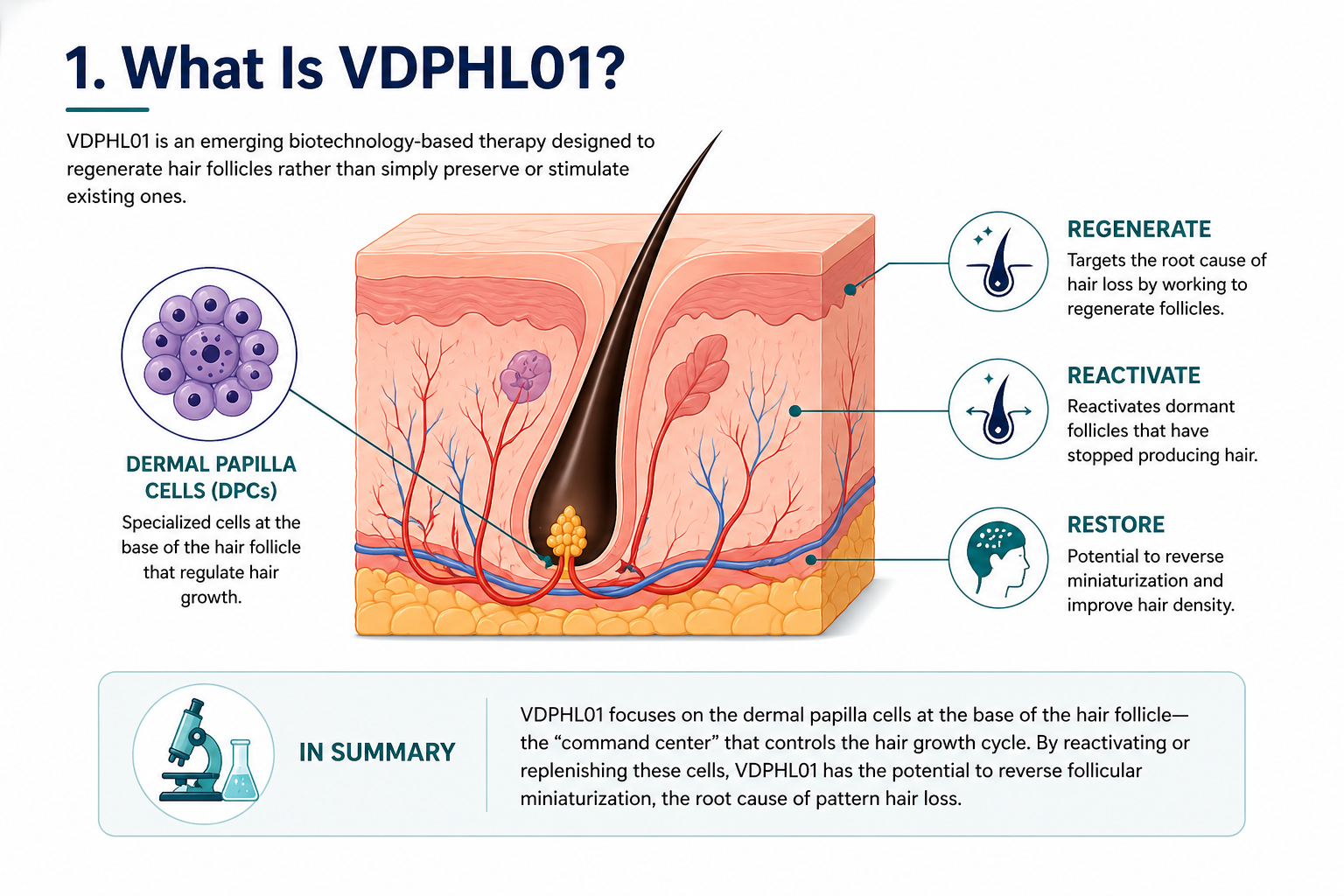
VDPHL01 is an emerging biotechnology-based treatment designed to regenerate hair follicles rather than simply preserve or stimulate existing ones. Unlike traditional treatments that slow hair loss, VDPHL01 is believed to target the root biological mechanisms behind androgenetic alopecia.
At its core, the therapy appears to focus on dermal papilla cells—specialized cells at the base of the hair follicle that regulate hair growth. These cells shrink and weaken in conditions like Androgenetic Alopecia, leading to thinner, shorter hairs over time.
VDPHL01 aims to reactivate or replenish these cells, potentially reversing follicular miniaturization altogether.
How VDPHL01 Works: A Regenerative Approach
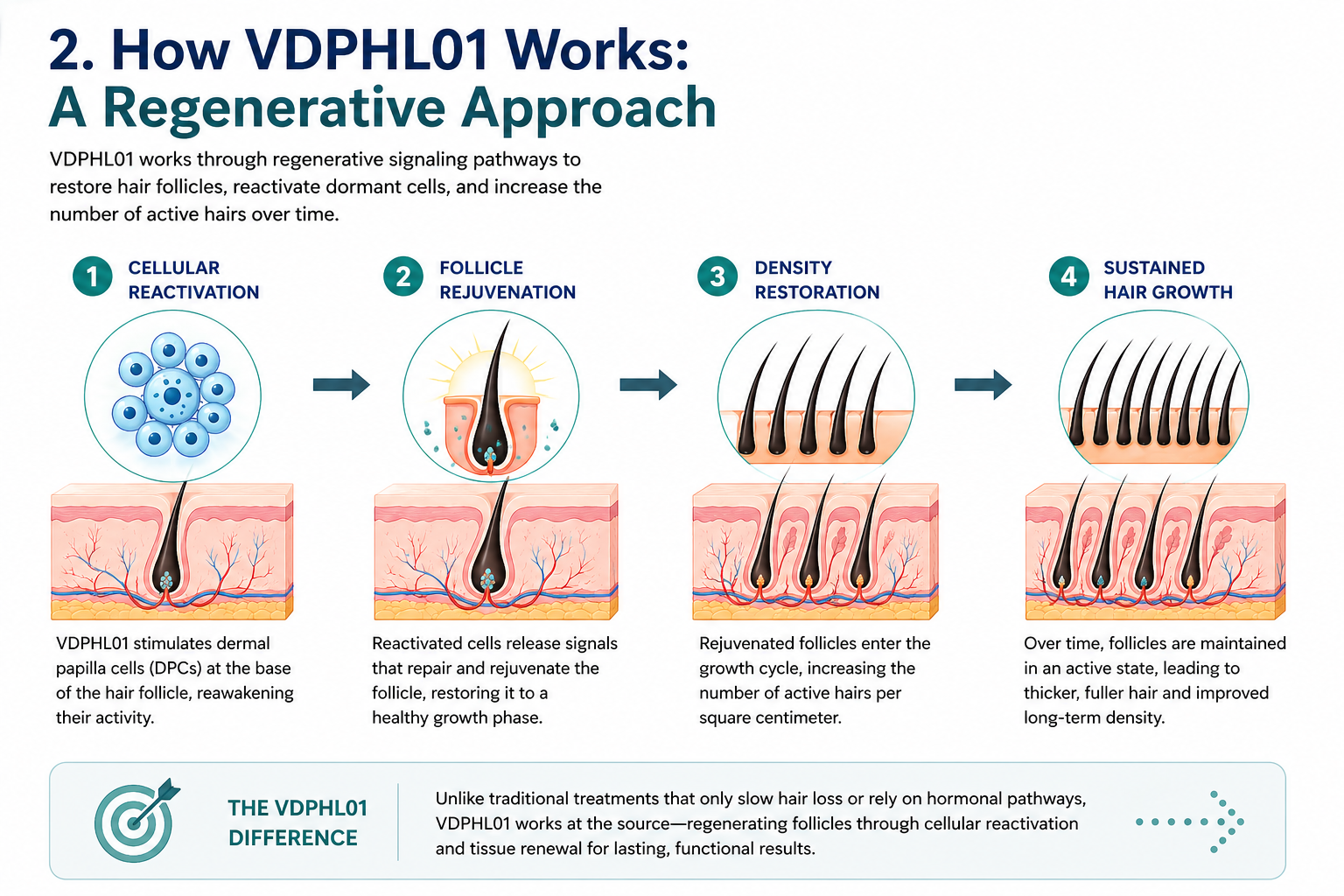
Unlike drugs that block DHT (such as Finasteride), VDPHL01 is thought to act through regenerative signaling pathways.
Here’s what makes it different:
- Follicle Rejuvenation: It may restore damaged follicles to a healthy growth phase
- Cellular Reactivation: Targets stem-cell-like activity within the follicle
- Density Restoration: Could potentially increase the number of active hairs per square centimeter
This positions VDPHL01 closer to a functional cure than to a lifelong management solution.
Why Current Treatments Fall Short
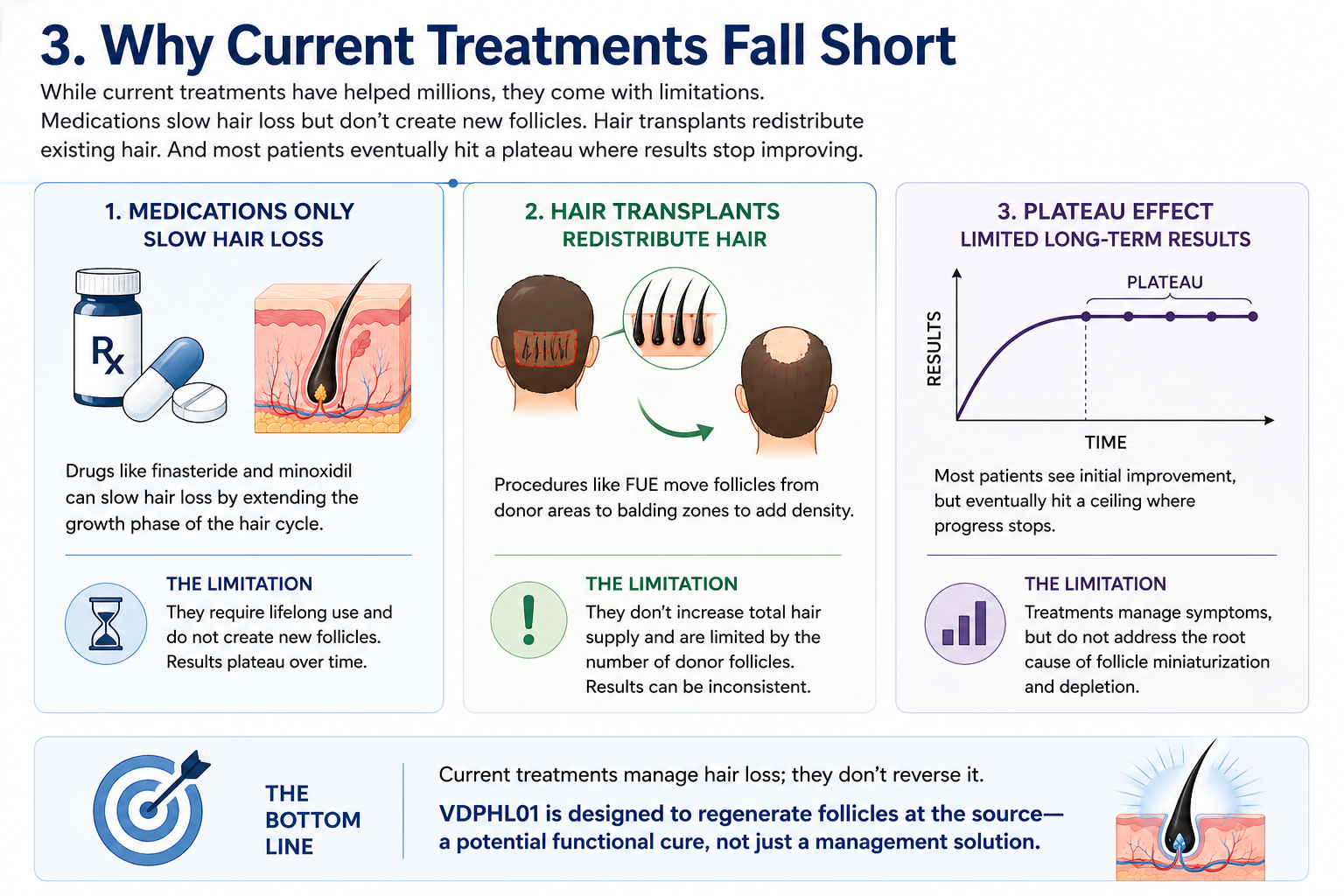
To understand why VDPHL01 is so exciting, it helps to look at the limitations of current options:
1. Medications Only Slow Hair Loss
- Finasteride reduces DHT but doesn’t create new follicles
- Minoxidil stimulates growth but requires lifelong use
2. Hair Transplants Redistribute Hair
Procedures like FUE move follicles from donor areas to balding zones—but they don’t increase total hair supply.
3. Plateau Effect
Most patients eventually hit a ceiling where results no longer improve.
VDPHL01’s promise lies in breaking through these limitations by creating or revitalizing follicles, not just maintaining them.
Early Results and Scientific Promise
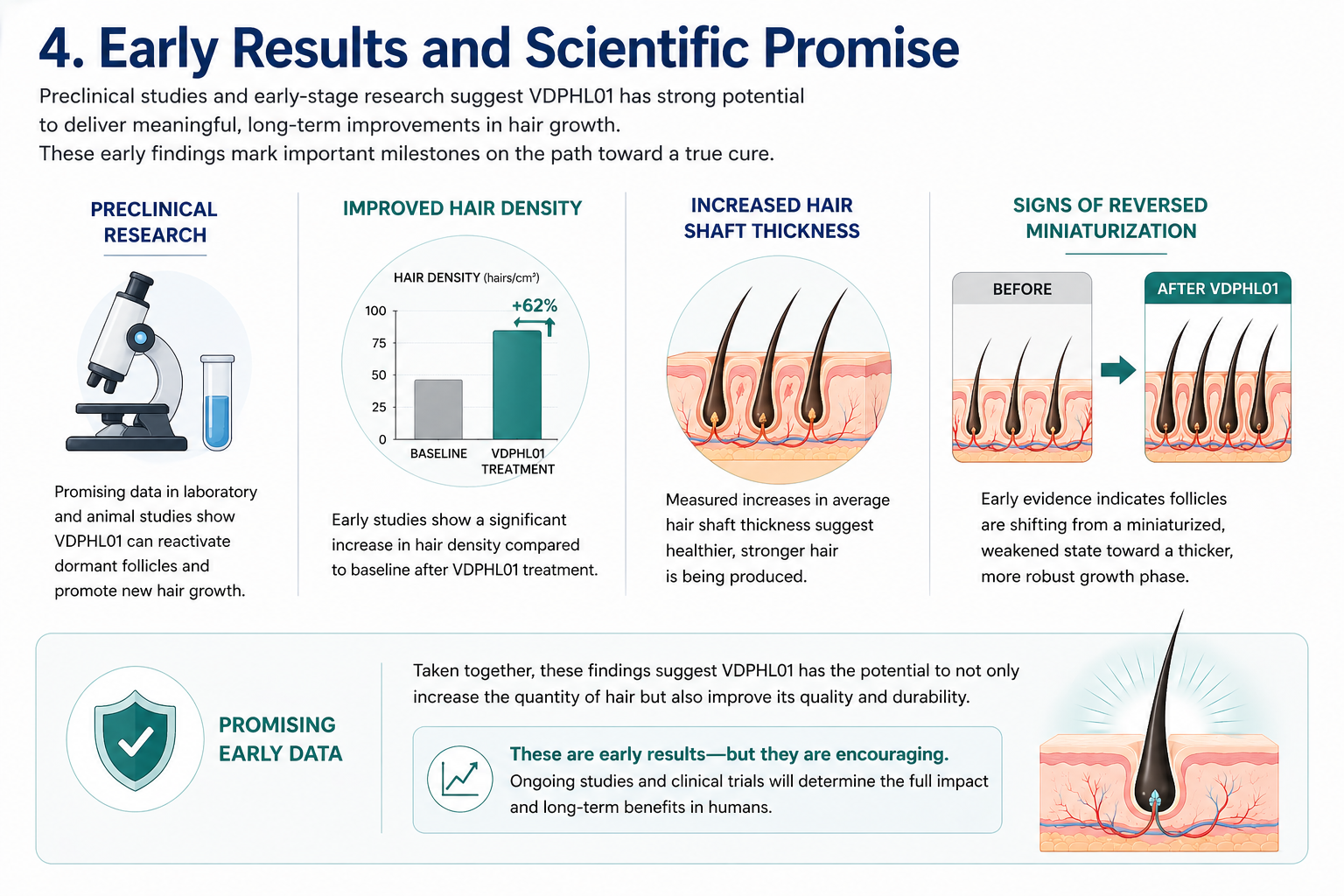
While still in development, early research and preclinical discussions suggest:
- Increased hair shaft thickness
- Improved follicular density
- Signs of reversed miniaturization
These are critical markers. In hair loss science, reversing miniaturization is often considered the “holy grail.”
However, it’s important to stay grounded—many promising treatments have shown early success but failed in later-stage trials.
Is VDPHL01 a True Hair Loss Cure?
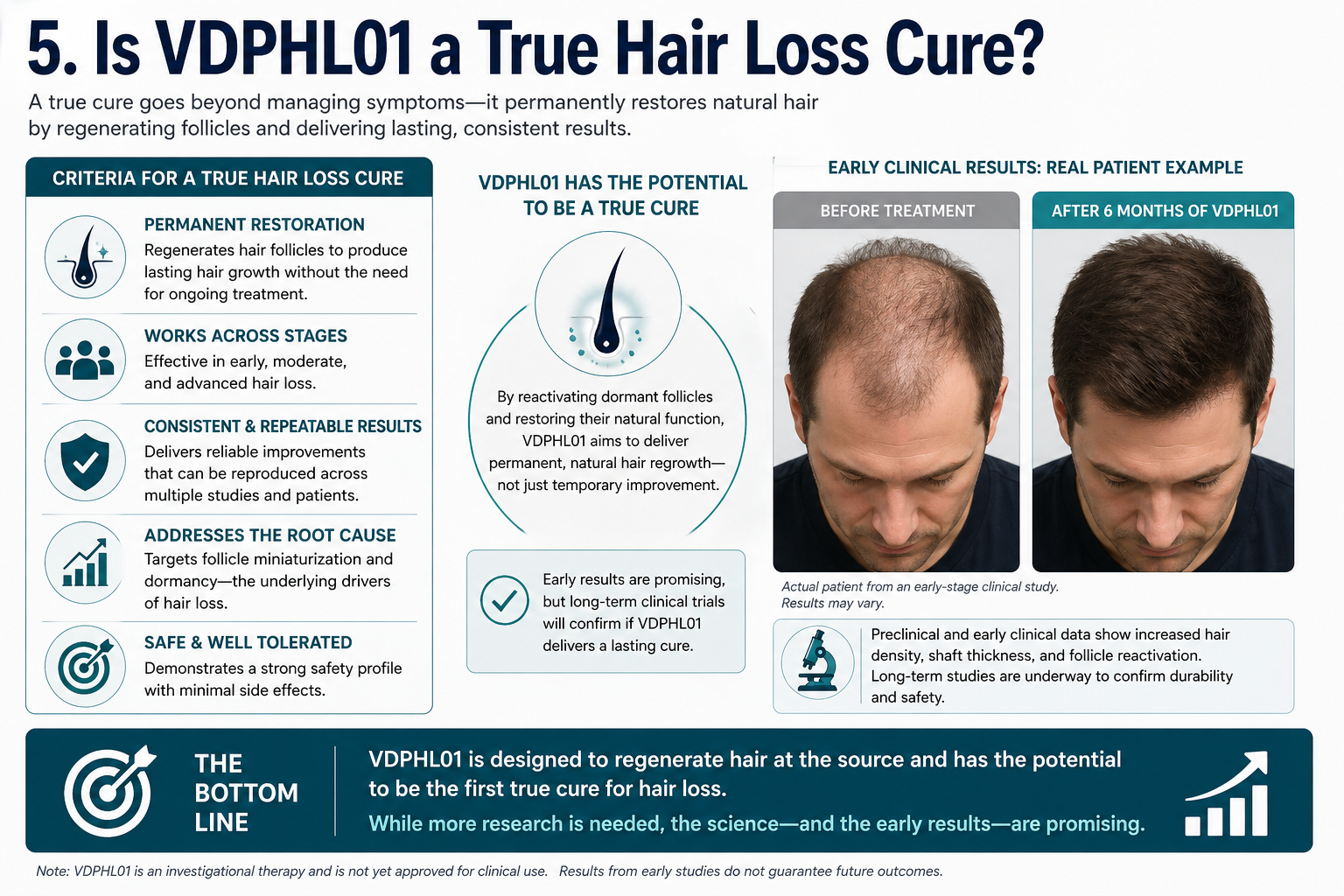
Calling anything a “cure” in medicine is a high bar. For VDPHL01 to truly earn that label, it would need to:
- Permanently restore hair without ongoing treatment
- Work across different stages of hair loss
- Produce consistent, repeatable results
At this stage, VDPHL01 is not yet a confirmed cure—but it may represent a major leap toward one.
How It Compares to Other Emerging Treatments
The hair loss space is evolving quickly. VDPHL01 is part of a broader wave of innovation that includes:
- Stem cell therapies
- Hair cloning research
- Exosome-based treatments
While many of these approaches show promise, few have demonstrated the combination of efficacy, scalability, and safety needed for mainstream adoption.
VDPHL01 stands out because it appears to directly address follicle biology, rather than working around it.
Timeline: When Could VDPHL01 Be Available?
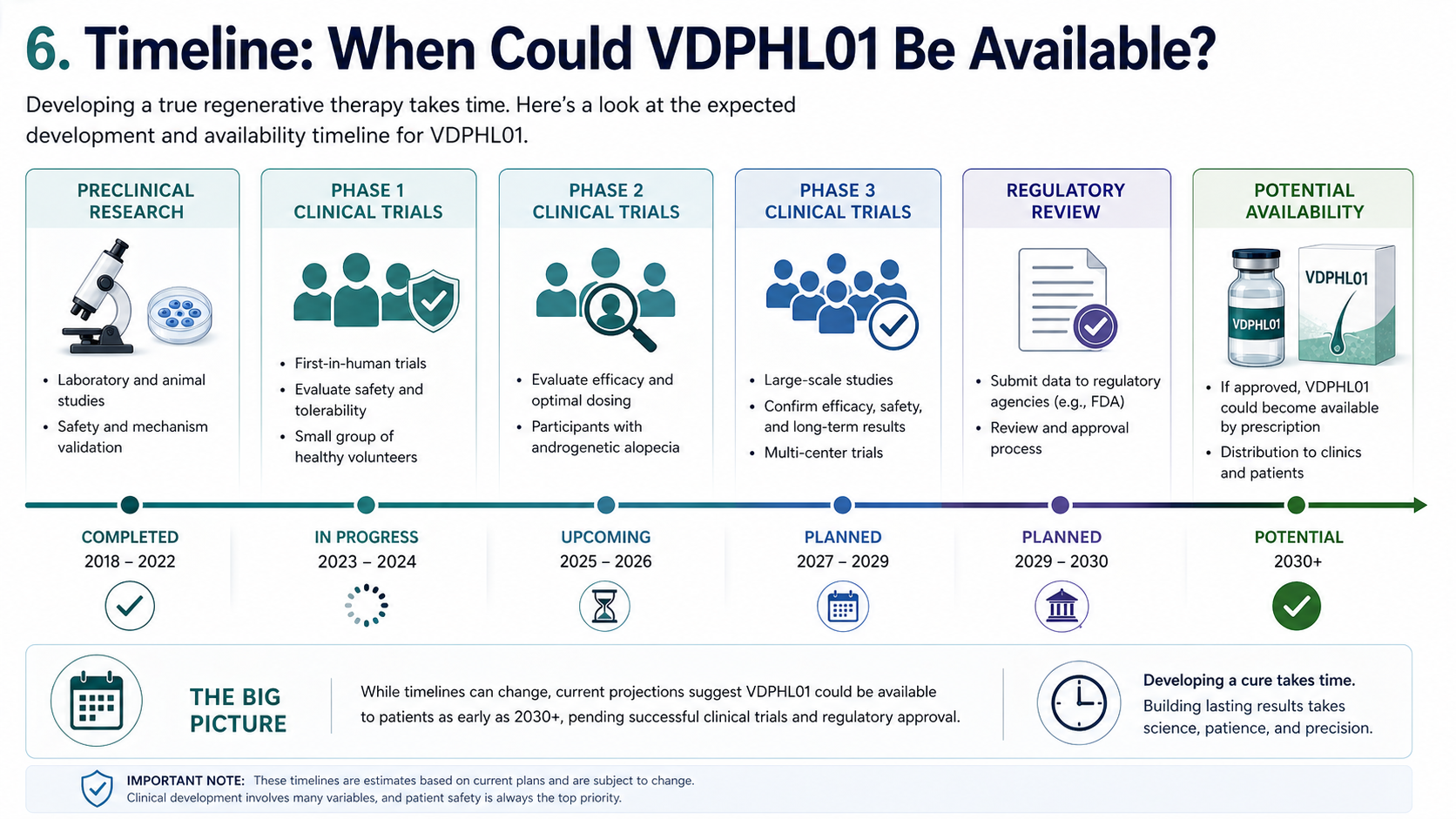
One of the biggest questions is timing.
Typical drug development timelines include:
- Preclinical Research
- Phase I Trials (Safety)
- Phase II Trials (Effectiveness)
- Phase III Trials (Large-scale validation)
Even fast-tracked treatments can take several years before reaching the public.
If VDPHL01 continues to show promise, optimistic projections might place availability within the next 5–10 years—though this is speculative.
Risks and Unknowns
As exciting as VDPHL01 sounds, there are still unanswered questions:
- Long-term safety
- Consistency across patients
- Cost and accessibility
- Regulatory approval hurdles
History has shown that many “breakthroughs” in hair loss don’t survive rigorous testing. Caution is warranted.
Final Verdict: Hope or Hype?
VDPHL01 represents one of the most compelling developments in hair restoration science in years. Its regenerative approach targets the core problem of follicular degeneration, something current treatments don’t fully address.
But let’s be clear:
👉 It is not yet a cure
👉 It is not yet available
👉 It is still under investigation
That said, if the science holds up, VDPHL01 could mark the beginning of a new era—one in which hair loss is not just managed but potentially reversed.
The Bottom Line
For now, the best approach remains a combination of proven treatments, realistic expectations, and careful research—something platforms like the Hair Restoration Network have emphasized for years.
VDPHL01 may not be the cure today…
…but it might be the closest we’ve ever been.