





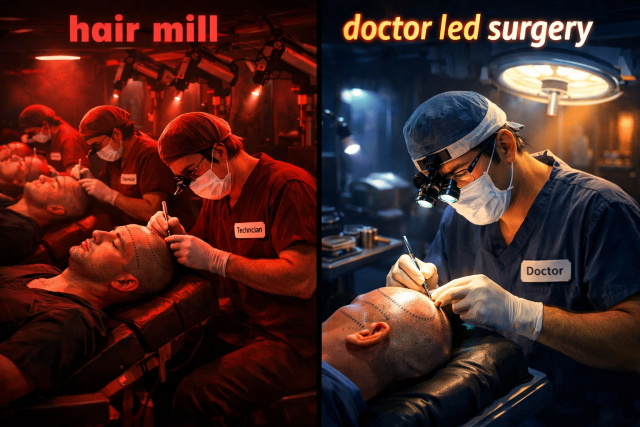

Thinking about a hair transplant? It's an exciting step towards regaining your confidence and a fuller head of hair. But with so many clinics worldwide, making the right choice is crucial. This article breaks down some of the biggest traps you need to avoid, from choosing a "technician-only" mill over a "doctor-led" clinic to understanding the real cost of a bad transplant.
"Doctor-Led" vs. "Technician-Only" – The Big Difference
The most critical decision you'll make is choosing a clinic that prioritizes medical expertise over speed and quantity. Here's how to spot the difference:
- Doctor-Led Clinic: In these clinics, a qualified and experienced hair transplant surgeon is actively involved in every step of your procedure. They will perform the crucial stages, such as the initial consultation, hairline design, graft extraction (depending on the technique), and, most importantly, the creation of recipient sites (making the tiny incisions where the hairs go). Technicians should only assist with tasks such as graft sorting and placement under the doctor's direct supervision.
- Technician-Only "Mill": These clinics are often high-volume factories focused on maximizing profit. The "doctor" might only appear briefly for a consultation or not be present at all. Technicians, who may have minimal training, perform the entire surgery, including critical steps they aren't legally or medically qualified for. This dramatically increases the risk of a poorly designed hairline, an unnatural look, or a botched procedure.
How to Vet a Clinic:
- Meet the Doctor: Demand an in-person or video consultation with the surgeon who will be performing your procedure, not just a consultant.
- Check Qualifications: Verify the doctor's credentials and membership in reputable organizations, such as belonging to the Hair Transplant Network.
- Ask About Roles: Ask directly: "Which specific parts of the surgery will the doctor perform, and which parts will the technicians do?"
The True Cost of a Botched Hair Transplant
Choosing a "technician-only" clinic might save you money upfront, but it can lead to devastating and expensive consequences. A botched hair transplant is not only visually unappealing, but it can also:
- Deplete Your Donor Hair: Every failed graft is a lost opportunity. Over-harvesting in the donor area can lead to a "moth-eaten" look that is permanent and difficult to repair.
- Require Costly Corrective Surgery: Repairing a bad transplant is significantly more complex, time-consuming, and expensive than the initial procedure. In many cases, it may not be possible to fully restore a natural look, or it may take multiple surgeries spread over years.
- Cause Emotional Distress: The psychological toll of a failed cosmetic procedure can be significant, impacting your confidence and well-being for years to come.
Remember, a "bargain" hair transplant that needs fixing will end up costing you far more, both financially and emotionally. Focus on quality and expertise first.
What Does "VIP Transfer" Actually Mean?
When researching international hair restoration, you will frequently encounter packages boasting "VIP Transfers." While being picked up from the airport in a Mercedes-Benz or a luxury van sounds like a premier experience, it is essential to look past the leather seats. In the world of hair transplantation, VIP treatment is often used to distract from a lack of surgical expertise.
The Illusion of Quality
The hard truth is that a luxury vehicle has zero correlation with your surgical outcome. Riding in a high-end car from the airport to your hotel or from the clinic back to your room does nothing to improve graft survival, hairline design, or donor management.
In many cases, these "concierge" services are a marketing tactic used by high-volume hair mills. These facilities prioritize the experience of the trip over the results of the procedure because the experience is easier to control than the surgery itself.
The "Mill" Connection
The most reputable doctor-led clinics focus their resources on medical staff, advanced instrumentation, and patient safety. Conversely, hair mills often establish lucrative partnerships with local hotels and transportation companies. They work in tandem to create a "medical tourism" ecosystem designed to move as many patients through the system as possible.
When a clinic emphasizes its fleet of luxury cars more than the specific medical credentials of the surgeon performing the procedure, it is selling a vacation, not a medical procedure.
What to Look for Instead
If you are traveling abroad for surgery, prioritize clinical transparency over logistical luxury. Ask yourself:
- Is the clinic spending more on its Instagram "lifestyle" aesthetic than on its surgical protocols?
- Am I paying for a skilled surgeon’s time, or am I paying for a hotel commission and a chauffeur?
- Would I rather have a seamless ride to the hotel, or a hairline that looks natural for the next thirty years?
The Bottom Line: Don't let a "VIP" label cloud your judgment. A ride in a luxury van lasts twenty minutes; a botched hair transplant lasts a lifetime.
Conclusion
A hair transplant is an investment in yourself. Don't let the allure of low prices or fancy-sounding perks compromise your results. Prioritize a reputable, doctor-led clinic where you meet and trust the surgeon who will perform your procedure. Choosing quality up front will spare you the expensive, emotionally taxing burden of corrective surgery down the road.