





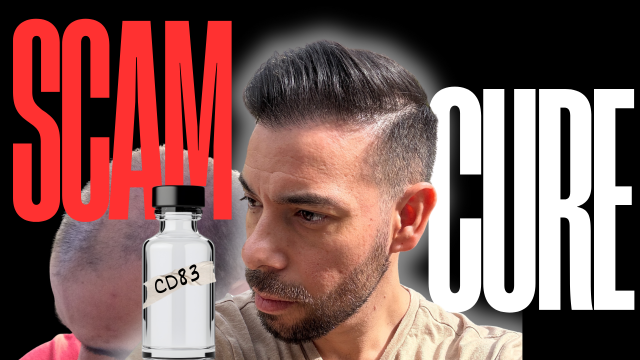

CD83—specifically its soluble form, sCD83—has quickly become one of the most talked-about new approaches in hair loss research. Major publications have highlighted it as a potential breakthrough, and early scientific papers suggest it may influence inflammation, follicle cycling, and even regenerative pathways.
But is CD83 truly the next major advancement in hair restoration? Or is it another experimental therapy receiving more hype than evidence?
This article breaks down the mechanism behind sCD83, what current research actually shows, and whether it’s realistic to expect CD83 to become a future treatment for hair loss.
What Is CD83, and Why Are Scientists Studying It for Hair Loss?
CD83 is a protein involved in regulating the immune system. A soluble form of this protein—soluble CD83 (sCD83)—has been the focus of new research due to its ability to reduce inflammation and promote tissue repair.
Because chronic inflammation and immune dysregulation contribute to both androgenetic alopecia (pattern hair loss) and alopecia areata, researchers began exploring whether sCD83 could help restore a healthier follicular environment.
How sCD83 Works: The Two Leading Mechanisms
Research suggests that sCD83 may promote hair growth through two complementary biological pathways.
1. Reducing Inflammation Around the Follicle
Inflammation can disrupt the hair cycle, shrinking follicles over time. sCD83 has been shown to:
- Reduce pro-inflammatory immune activity
- Encourage regulatory immune cells
- Support a healing, growth-friendly microenvironment
This mechanism is especially relevant in autoimmune-driven hair loss, but inflammation also affects miniaturizing follicles in androgenetic alopecia.
2. Stimulating Stem Cells and the Hair Growth Cycle
In animal and laboratory studies, sCD83 has been linked to:
- Activating hair follicle stem cells
- Promoting entry into the anagen (growth) phase
- Enhancing wound healing responses
- Supporting early signals associated with new follicle generation in model systems
These findings have fueled excitement—but they remain unproven in human subjects.
What Current Research Actually Shows (2025 Update)
To date, research on CD83 for hair growth is still preclinical. This includes:
- Mouse studies
- Ex vivo human skin experiments
- Mechanistic cellular research
These early studies are promising, but no published human clinical trials have shown that CD83 consistently regrows hair.
Biotech companies such as Mallia Therapeutics are working on both cosmetic and therapeutic versions of CD83-based products. However, meaningful clinical data in humans is still forthcoming.
Is CD83 a Real Cure for Hair Loss?
Not yet. Several key points explain why:
- Human trials are still pending
- No long-term safety or efficacy data exists
- Mouse results often overpredict human outcomes
- Different types of hair loss respond differently to immune modulation
CD83 may one day become an important treatment, but calling it a “cure” is premature.
How CD83 Compares to Current Hair Loss Treatments
Finasteride
Finasteride blocks DHT—one of the root causes of male pattern hair loss. CD83 works through immune pathways, not hormone pathways, so the two mechanisms are entirely different.
Minoxidil
Minoxidil improves blood flow and potassium channel activity. CD83 may support immune normalization and stem-cell signaling, potentially complementing other treatments, if proven effective.
PRP, Exosomes, and Regenerative Therapies
Many regenerative approaches aim to enhance signaling around the follicle. CD83 could represent a more targeted, next-generation option—but only if clinical studies validate its effects.
Is CD83 Worth the Hype?
CD83 deserves attention—but not blind optimism.
Why CD83 Is Exciting
- Strong biological rationale
- Positive results in early studies
- Potential dual mechanism
- Could address both inflammation and follicle activation
Why Caution Is Essential
- No published human trials
- Unknown real-world regrowth levels
- No established dosage or delivery method
- Long-term safety data still needed
Overall, CD83 is promising but unproven.
When Will CD83 Be Available?
Cosmetic formulations may appear earlier, but true medical-grade CD83 therapies will require:
- Successful clinical trials
- Regulatory approval
- Large-scale safety and efficacy data
A realistic timeline for widespread medical use is several years away, possibly 2026–2028 or later.
Frequently Asked Questions About CD83
Does CD83 regrow hair in humans?
There is no human clinical evidence yet.
Can CD83 form new hair follicles?
This has been suggested in mouse wound-healing models, but it has not been confirmed in humans.
Is CD83 safer than immunosuppressive drugs?
Because it may act locally, the safety profile could be favorable, though further studies are needed.
Is CD83 better than finasteride or minoxidil?
No comparison is possible until human trials are completed.
When can patients expect CD83 treatments?
Timelines depend on clinical development, with medical availability likely years away.
Should You Wait for CD83?
While CD83 remains an exciting candidate, patients experiencing hair loss today should not delay proven treatments in hopes of a future therapy. Conditions like androgenetic alopecia worsen over time, making early intervention important.
The best approach is to consult with a knowledgeable hair restoration specialist who understands both current treatments and emerging research, such as CD83.
Consult a Hair Loss Professional
For expert guidance on hair loss—and to explore all treatment options, including upcoming developments—visit our vetted surgeon directory:
You can connect with experienced, recommended hair restoration surgeons who can evaluate your case and provide personalized treatment recommendations.